Candlestick Patterns: A Beginner's Complete Guide
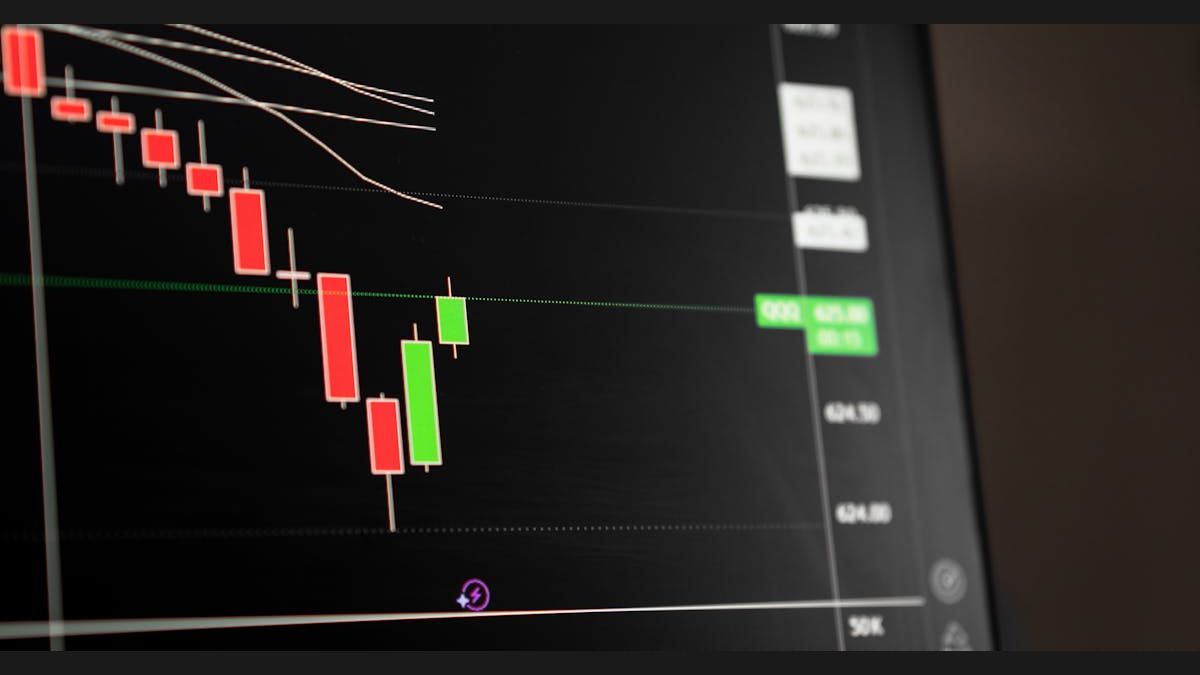
Candlestick charts are the most popular way to visualize price action. Every candle tells a story about the battle between buyers and sellers during a specific time period. Once you learn to read them, you gain an edge that most retail traders never develop.
This guide covers everything you need to start reading candlestick charts today, plus the six patterns you should learn first.
Anatomy of a Candlestick
Each candlestick represents four data points for a given time period (one day, one hour, one week, etc.):
- Open – the price at the start of the period
- High – the highest price reached during the period
- Low – the lowest price reached during the period
- Close – the price at the end of the period
The thick part of the candle is called the body. It shows the range between open and close. The thin lines above and below the body are called shadows (or wicks). They show the high and low extremes.
Bullish vs Bearish Candles
A bullish candle (usually green or white) means the close was higher than the open. Buyers won that period. A bearish candle (usually red or black) means the close was lower than the open. Sellers won.
The size of the body matters. A long body shows strong conviction. A short body shows indecision. The length of the shadows tells you how far the price was pushed before being rejected.
The 6 Patterns to Learn First
There are dozens of candlestick patterns, but these six form the foundation. Master these before moving on to more complex formations.
1. Doji
A doji forms when the open and close are nearly identical, creating a cross-shaped candle. It signals indecision. After a strong trend, a doji warns that momentum may be fading. Always wait for the next candle to confirm direction before acting.
2. Hammer
The hammer has a small body near the top and a long lower shadow (at least twice the body length). It appears at the bottom of a downtrend and signals that sellers pushed the price down, but buyers fought back and closed near the high. It is a bullish reversal signal.
3. Shooting Star
The shooting star is the inverse of the hammer. It has a small body near the bottom and a long upper shadow. It appears at the top of an uptrend and signals that buyers pushed the price up, but sellers took control and closed near the low. It is a bearish reversal signal.
4. Engulfing Pattern
An engulfing pattern is a two-candle formation where the second candle completely covers (engulfs) the body of the first. A bullish engulfing at a support level is a strong buy signal. A bearish engulfing at resistance is a strong sell signal. The larger the second candle relative to the first, the more significant the pattern.
5. Morning Star
The morning star is a three-candle bullish reversal pattern. First, a large bearish candle. Then a small-bodied candle (the "star") that gaps down. Finally, a large bullish candle that closes above the midpoint of the first candle. It signals that selling pressure has exhausted and buyers are taking over.
6. Evening Star
The evening star is the bearish mirror of the morning star. A large bullish candle, then a small-bodied candle that gaps up, followed by a large bearish candle. It signals that buying pressure has exhausted and sellers are stepping in.
How to Read Patterns in Context
A candlestick pattern by itself means very little. Context is everything. Here is what to check before acting on any pattern:
- Trend direction – reversal patterns only matter after a clear trend. A hammer in a sideways market is noise.
- Support and resistance – patterns at key levels carry more weight. A shooting star at a major resistance zone is far more significant than one in the middle of nowhere.
- Volume – high volume confirms the pattern. If a bullish engulfing forms on below-average volume, the signal is weak.
- Timeframe – patterns on daily and weekly charts are more reliable than those on 5-minute or 15-minute charts.
Browse the full pattern library for detailed guides on each formation, including entry rules and success rates.
Common Mistakes Beginners Make
Most beginners lose money with candlestick patterns not because the patterns fail, but because they misuse them. Avoid these errors:
- Trading patterns in isolation. Never trade a pattern without checking the trend, volume, and nearby support/resistance levels.
- Ignoring confirmation. A doji or hammer is only a warning. Wait for the next candle to confirm the reversal before entering a trade.
- Using short timeframes. On a 1-minute chart, you will see hundreds of patterns per day. Most of them are meaningless. Stick to daily charts when learning.
- Forgetting risk management. Even the best pattern fails 30-40% of the time. Always set a stop-loss and size your position appropriately.
- Memorizing too many patterns. You do not need to know 50 patterns. Master these six first. Add more only when you can trade these profitably.
Next Steps
Start by identifying these six patterns on historical charts. Do not trade them yet. Simply practice spotting them in context and noting what happened next. After a few weeks of observation, paper trade your findings before risking real capital.
Combine your candlestick analysis with support and resistance levels and volume analysis to build a more complete picture of what the market is telling you.
Part of our Technical Analysis Guide