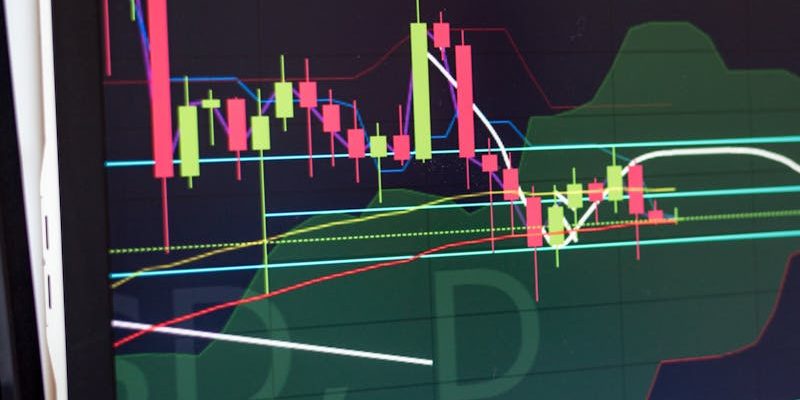
How to Identify a Doji
• Open equals close: The opening and closing prices are virtually identical, creating an extremely small or nonexistent body. The body should be less than 5% of the total candle range.
• Long upper and lower shadows: Both wicks extend significantly above and below the body, showing that price moved sharply in both directions during the session before settling back near the open.
• Appears after a sustained trend: A Doji is most meaningful when it forms after several consecutive bullish or bearish candles. In the middle of a consolidation, a Doji carries much less significance.
• Signals indecision: The pattern tells you that the balance of power between buyers and sellers has temporarily equalized. Neither side could maintain control by the close, suggesting the prevailing trend may be losing momentum.
How to Trade the Doji
Entry
Wait for the next candle to confirm direction. Enter short below the Doji low (bearish reversal) or long above the Doji high (bullish reversal). Never trade the Doji candle alone.
Stop-Loss
Place your stop above the Doji high for short trades, or below the Doji low for long trades. The stop should capture the full range of the indecision candle.
Target
Aim for the next support level (bearish) or resistance level (bullish). A minimum 1:2 risk-to-reward ratio is recommended. Previous swing highs/lows make excellent targets.
Success Rate
On its own, the Doji is essentially a coin flip because it signals indecision, not direction. However, when confirmed with the next candle and supported by volume analysis, the success rate climbs to 65-70%. The Doji performs best on daily and weekly timeframes, at established support or resistance zones, and when volume spikes on the confirmation candle. Avoid trading Dojis on intraday charts below 4 hours where they appear far too frequently to be meaningful.
Frequently Asked Questions
Related Patterns
Related Tools & Guides
Part of our Technical Analysis Guide